

Many NRIs want exposure to India’s markets, but they pause at one basic question: Can NRIs invest in mutual funds? In most cases, yes. Indian mutual funds commonly allow NRIs and OCIs to invest, but they do so subject to FEMA compliance, SEBI-linked KYC requirements, and the fund house’s onboarding rules.
This is an awareness guide, not personal advice. Your exact process can change based on your country of residence, the AMC you choose, and the bank route you use.
Mutual Funds Investment In India – Eligibility Criteria For NRIs
NRIs and OCIs can generally invest in Indian mutual funds if they meet the documentation and compliance requirements. You will almost always need a valid PAN and completed KYC. You will also need FATCA and CRS declarations where applicable.
One more factor matters in real life. Some AMCs choose not to onboard investors from certain jurisdictions because of additional compliance burdens. This is not a single uniform rule across the industry. It varies by AMC, by distributor, and sometimes by the specific platform you use. You should check the AMC’s current policy before you start an SIP.
Steps For NRIs Investing In Mutual Funds
Most NRI mutual fund investing follows a simple flow. It feels easy when your documents align. It feels slow when they do not.
Complete KYC Before Investing
The first step before investing in mutual funds is to submit your PAN details, including your identity and address proof, and any additional declarations required for non-residents. Basically, you must complete the KYC initially. Your intermediary may also ask for in-person verification or an equivalent accepted process.
Choose A Transaction Channel
You can invest through an AMC website, a registrar-supported portal, or a distributor platform. Many digital channels create a profile for order placement and holding visibility. That profile often functions like an Investment Account where you place purchases, start SIPs, and track folios in one view.
Use A Permitted Banking Route
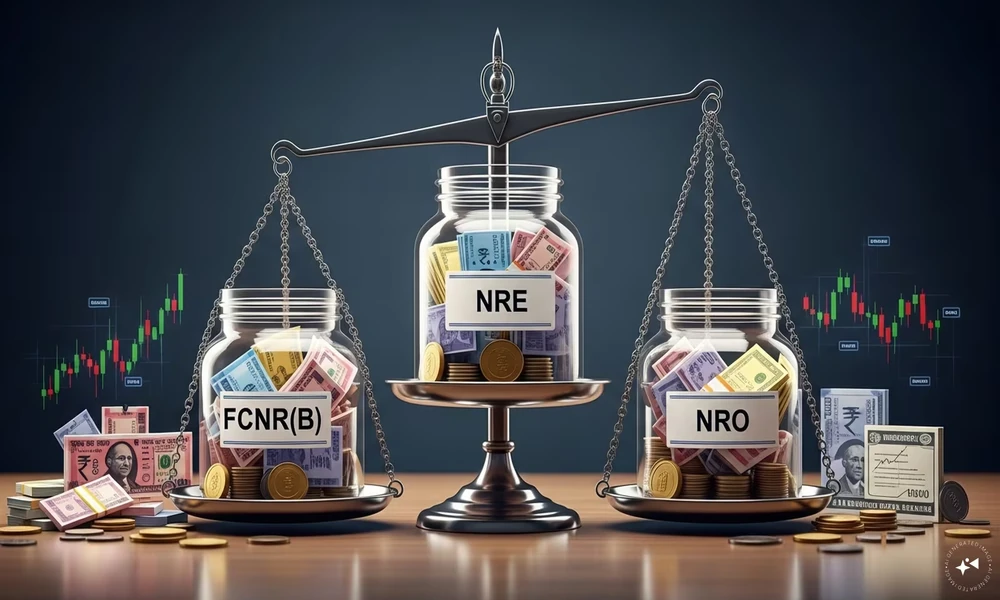
Your money typically comes from NRE or NRO banking routes based on what the platform accepts and how you want to treat repatriation. Your bank and the AMC may ask you to declare the source of funds. If you want clarity later, decide the funding route at the start and keep it consistent.
Tax And Repatriation Points To Keep In Mind
Do not treat this as a paperwork detail. It affects what happens at redemption.
For taxes, mutual funds can deduct TDS for non-residents on redemptions as per the Income Tax Act. Your final tax liability depends on factors like the type of mutual fund and your holding period. Because tax outcomes vary, you should confirm the current rules for your situation before you redeem a large amount.
For repatriation, banks can require documentation when you remit proceeds abroad. The process depends on the nature of the funds and the bank’s checks. If you expect to move money overseas later, ask your bank what proof it will need, and keep your purchase and redemption records.
Banking And Account Choices NRIs Typically Consider
Many banks bundle NRI services under an NRI Account relationship, which can make documentation and transaction routing easier. The actual investing still happens through the mutual fund and its platform, but banks can help with KYC support, inward remittance tracking, and outward transfer paperwork when needed.
Now, if your bank offers a dedicated Wealth Account proposition for NRIs, guided access to products, consolidated reporting, and service support might be available. Remember that these are service features, so compare fees and the exact deliverables before you opt in.
You can also invest without bundled banking. If you prefer a self-directed approach to your investment, a standalone platform Investment Account can work well. But it must support NRI onboarding and FATCA workflows.
Conclusion
So, the answer to “can an NRI invest in mutual funds?” is YES. But with considerations. You need proper account structures, updated KYC documentation, and awareness of tax implications. Thus, if you have the correct setup and a specialised Wealth Account, you can get exposure to Indian markets efficiently while maintaining complete compliance.
