

 Provider Network Holdings Scales Leadership: What Keith Crawford’s Appointment Reveals About Specialty Healthcare
  Basics Of FX Trading: A Simple Guide For New Traders
  Technical Analysis Concepts Strengthening Trading Accuracy across Multiple Financial Instruments
  Public Offering (IPO) News and Upcoming IPO Calendar: All you need to know
  How Disabled Do You Need to Be to Qualify for a TPD Benefit?
  Looking for Ways to Optimize Payroll Management in Malaysia?
  Hong Kong MPF Wise Retirement Planning
  Why do meme tokens gain traction among crypto participants?
  Understanding Performance Bonds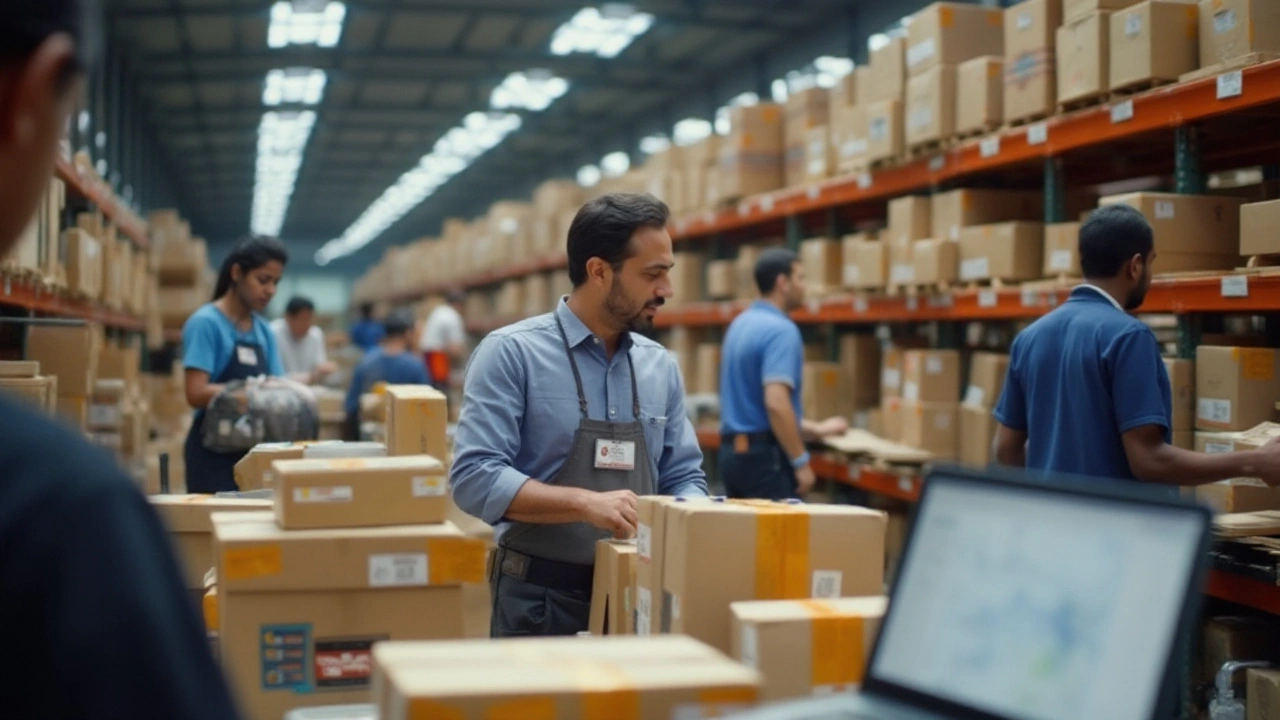
Distributed warehouse networks have become one of the most important pillars of the modern order fulfillment industry. In today’s fast-moving e-commerce environment, businesses that fail to leverage this cost-saving strategy risk falling behind competitors.
Technology has transformed the way consumers shop. Online purchasing is easier than ever, and customers increasingly expect their orders to arrive almost immediately.
One- to two-day delivery has quickly become the norm across much of the country. Demand for faster and more affordable shipping continues to rise, and in many markets same-day delivery is no longer unusual.
Order fulfillment providers – including Transervio – recognize the growing importance of distributed warehouse networks and are expanding their logistics footprints to keep up with consumer expectations. By purchasing or leasing warehouse facilities across the United States, these companies position themselves to remain competitive in the rapidly evolving supply-chain landscape.
“Distributed warehouses located across the nation mean your order will be fulfilled from a facility closest to your customer,” the company states on its website, Transervio.com.
Why Warehouse Networks Matter
Having access to a strategically placed network of warehouses offers businesses a number of advantages. Perhaps the most significant benefit is lower shipping costs.
At Transervio, clients looking to increase margins can significantly reduce the cost of getting products to customers’ doorsteps by utilizing distributed warehouse locations.
These fulfillment centers also dramatically reduce the amount of time it takes to process orders and prepare them for shipment.
“A partnership with Transervio allows businesses to enjoy the benefits of distributed warehouses without the massive costs associated with building and maintaining such a large network,” the company states on its website.
For many businesses – especially small and mid-sized companies – building their own national warehouse network would require enormous capital investments. Partnering with a fulfillment provider can offer many of the same benefits without the financial burden.
A Wide Range of Warehouse Networks
Across the order fulfillment industry, the size of distributed warehouse networks varies widely. Some providers operate a single facility, while others manage dozens or even hundreds of warehouses.
According to its website, Transervio operates dozens of distributed warehouses throughout the United States, giving clients broad geographic coverage.
Fulfillify, an e-commerce fulfillment provider, also offers nationwide shipping coverage with four fulfillment centers.
Easyship takes a slightly different approach. While the company does not operate its own distributed warehouses, it partners with third-party logistics providers that maintain distribution centers in various parts of the country.
Simpl Fulfillment, meanwhile, integrates with several warehouse facilities that allow businesses to store inventory, pick and pack orders, and manage shipments more efficiently.
The variety of warehouse strategies highlights how fulfillment providers adapt their operations to meet the growing needs of online retailers.
Speed Matters in E-Commerce
Fast delivery has become a critical factor in online retail. The faster a customer receives an order, the more likely they are to return and make another purchase.
Order fulfillment companies understand how valuable repeat customers are for the businesses they serve, and speed has become a key competitive advantage.
Simpl Fulfillment says it processes orders within 48 hours or less once products arrive at its warehouse facilities. Fulfillify reports that most U.S. orders are delivered within one to two days.
Transervio also emphasizes quick and efficient shipping once an online order is placed.
“From the moment a customer places an order, the process is designed to quickly and accurately fulfill it and get it out the door without delay,” the company states on its website.
Behind the scenes, technology plays an increasingly important role in making fast delivery possible. When an order is placed, the company’s artificial intelligence system identifies the warehouse located closest to the customer’s delivery address. The order is then automatically routed to that facility, where it is processed, packed, and shipped.
By combining distributed warehousing with advanced logistics technology, fulfillment providers aim to meet the rising expectations of modern online shoppers.